






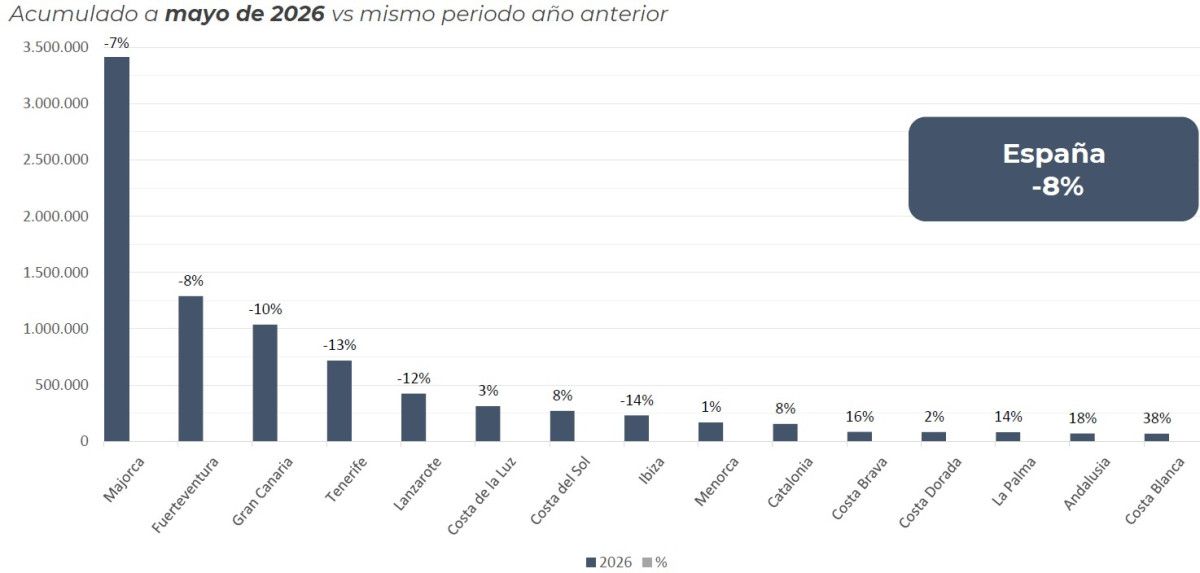
Spanish coastal operators face demand bifurcation as German leisure shifts inland
Spain's hotel sector is experiencing a structural reallocation of German leisure demand away from Balearic and Canary Island properties toward mainland Peninsula destinations, signaling a fundamental shift in how European source markets are pricing and valuing Mediterranean seasonality. German travel intention data shows accumulated declines to Baleares and Canarias while mainland Spain interest accelerates, a pattern that contradicts the traditional summer leisure playbook where island properties command premium positioning and occupancy. This reallocation matters because German tourists represent 15–18% of Spanish coastal hotel demand and typically anchor RevPAR during peak season; when this cohort shifts to lower-priced mainland alternatives, island operators face either occupancy compression or margin erosion on rooms that were previously sold at 85–92% occupancy at €180+ nightly rates. The underlying driver appears to be price sensitivity following two years of post-pandemic premiumization—German corporate travel budgets remain constrained, and mainland Spain offers equivalent cultural and gastronomic experiences at 20–30% lower daily rates. For island-dependent operators, the coming months demand immediate tactical response: dynamic pricing models that protect occupancy over rate, accelerated ancillary monetization (F&B, experiences, wellness packages), and repositioning toward UK and Nordic source markets where price elasticity remains lower.