





DolceVita
Chi SiamoConsulenzaMetodo DolceVitaAcademyFormazioneNewsMarket Intelligence
ITENAR
Iniziamo
DolceVitainfo@dolcevitahospitality.com

Azienda

Chi SiamoConsulenzaContattiFAQAcademy

Intelligence

Market IntelligenceNewsBlog

Mercati

RomeMilanDubaiRiyadhLondonParis

© 2026 DolceVita Hospitality. Tutti i diritti riservati.

TerminiPrivacy
The DolceVita

Market Intelligence

Week of May 18, 2026

Airlines & Travel
Lead SignalAirlines & Travel

Heat migration and border friction redraw travel flows

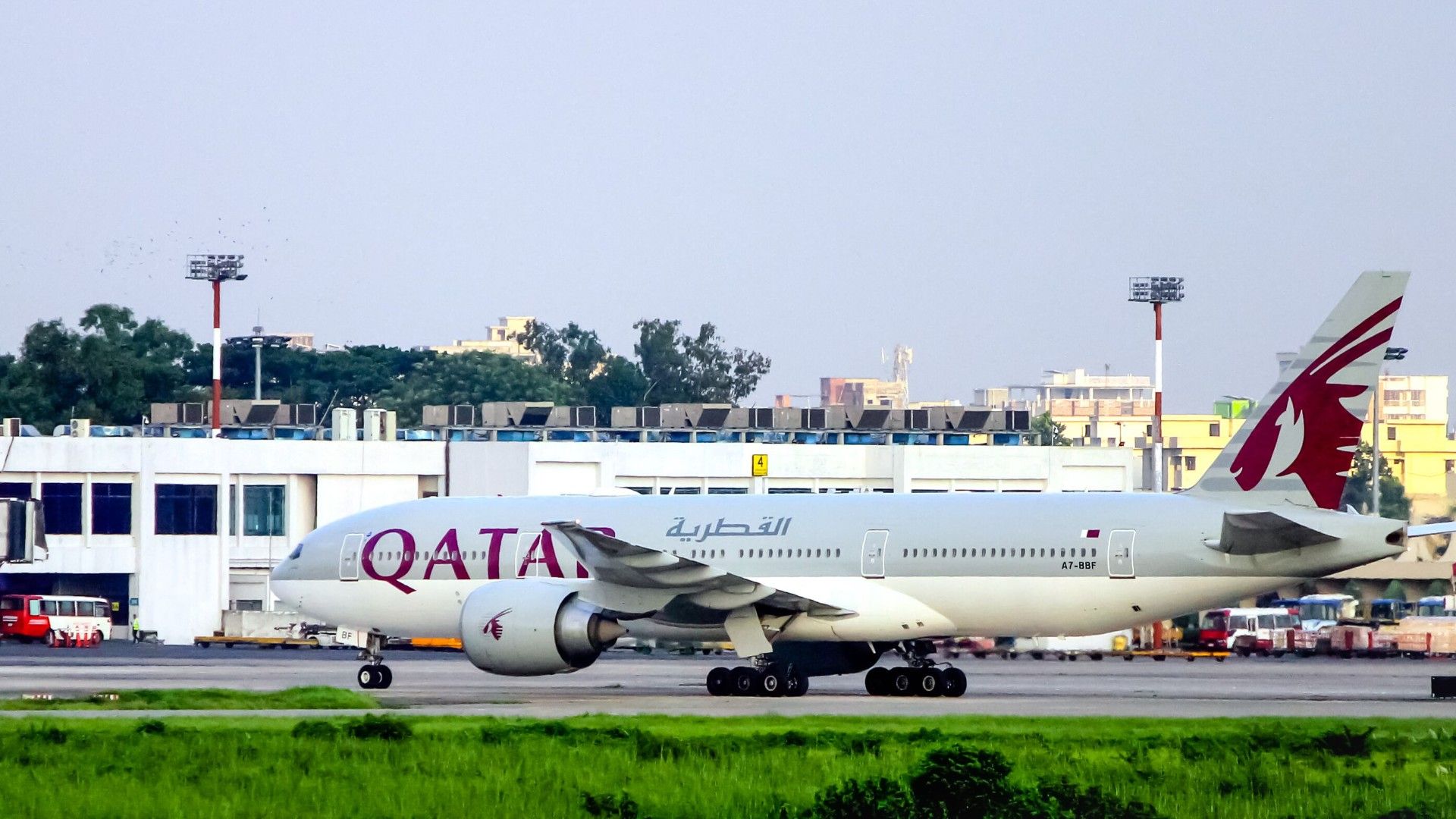
This week, attention will center on two opposing forces shaping summer demand: Indochina’s weather-linked inbound surge and Europe’s border-processing drag as the EU Entry/Exit System moves closer to full traveler impact. Thailand, Vietnam, Cambodia and Laos are gaining from Western travelers escaping record Mediterranean heat, and that matters because climate is now acting as a booking trigger rather than just a trip-planning variable; when temperature stress shifts even a small share of long-haul demand, gateway cities such as Bangkok and Hanoi capture upside across airlift, tours and upper-upscale urban hotels. At the same time, a new poll shows a majority of Britons expect airport delays tied to EES, with some checkpoints flagged for waits of up to three hours, creating a meaningful deterrent for short-break travel and raising the value of destinations with smoother arrivals and stronger in-country rail or domestic aviation links. Network strategy reinforces the divergence: Qatar Airways resumes Abu Dhabi service while United adds Sapporo and more Tokyo-Narita flying this winter, signaling that carriers are still placing scarce capacity into Asia corridors where premium leisure and visiting-friends-and-relatives demand are more legible than in congestion-prone European gateways. We expect hotel owners and investors to use the coming months to rebalance acquisition and marketing toward climate-beneficiary destinations, while hardening operations around arrival friction through flexible check-in windows, airport transfer partnerships, and direct-booking messaging that turns uncertainty at the border into reassurance at the property.

Hotels & Resorts
02Hotels & Resorts

Distribution control shifts from rooms to guest lifetime value

This week, hotel operators will focus less on unit growth and more on who controls the booking relationship before arrival, because the margin battle is moving upstream into pre-stay retailing, CRM and AI-led discovery. Chatrium Hotels’ adoption of Profitroom is instructive: the commercial case is not merely a nicer booking engine, but the ability to convert direct demand, package ancillaries earlier, and defend net RevPAR against OTA commissions that can easily absorb 15% to 25% of room revenue in many markets. Spanish industry discussion around “the new hotel revenue beginning before check-in” and the race to control AI-era distribution points to the same conclusion—properties that fail to merchandise transfers, dining, upgrades and experiences before arrival are leaving high-intent spend to intermediaries and local third parties. Meanwhile, Hyatt’s expansion playbook and QuoHotel’s positioning around post-2020 management complexity show why scale and systems matter now: labor constraints, multi-property reporting and channel fragmentation reward platforms that can centralize data while preserving brand proposition, especially in resort markets such as Bali where SONO has just signed new inventory. Our takeaway for owners is direct: in the coming months, capex on commercial tech should be underwritten like a yield project, with success measured in direct mix, pre-arrival conversion, ancillary capture per booking, and reduced dependency on paid search rather than in occupancy alone.

Investment & Deals
03Investment & Deals

Operational discipline overtakes top-line glamour in travel capital

This week, investors will parse a harsher message from travel balance sheets: revenue records no longer insulate management teams from cost resets, asset write-downs or restructuring when capital efficiency disappoints. Southwest Airlines reported a record $7.2 billion in first-quarter revenue yet still cut 75 employees as part of operational restructuring, a reminder that public markets now reward precision in scheduling, labor deployment and profitability more than headline sales growth. In parallel, Kuwait’s Makhazen posted a $731 million first-quarter loss after a full provision on investment properties, underscoring how quickly real-estate-linked balance sheets can reprice when underlying assumptions on value, utilization or marketability break down. For hospitality capital, the lesson is broader than either company: debt costs remain elevated, investors are less tolerant of passive landbanking, and mixed-use or travel-adjacent assets must prove cash-flow resilience rather than rely on narrative. Peru’s push to position itself for major events fused with heritage and nature also matters here, because event-led destination strategy increasingly attracts infrastructure, venue, and hotel capital only when public and private sponsors can quantify year-round monetization rather than one-off spectacle. We expect the coming months to favor owners who can present lenders and partners with asset-level productivity metrics—EBITDA flow-through, ancillary spend, and scenario-tested valuation assumptions—over those still selling growth stories unbacked by operating evidence.

Luxury
04Luxury

Barefoot villa demand becomes the new trophy currency

This week, luxury watchlists will tilt toward villa-led formats in Indian Ocean and tropical beach markets, where affluent travelers are choosing private-use inventory that combines residential freedom with resort service rather than classic suite-led prestige. Mauritius stands out because editorial demand is clustering around honeymoon-worthy villas with private pools, beach access and all-day indoor-outdoor living, and that preference has direct financial implications: one multi-bedroom villa can generate the equivalent of several standard rooms while supporting higher spend on private dining, wellness, transfers and curated excursions. The broader tropical shortlists now stretch from South Caicos to Trancoso and reef-led destinations, reinforcing a luxury demand shift away from logo-heavy urban consumption toward scenery, seclusion and low-friction family or couple occupancy. This is happening now because high-net-worth travelers increasingly optimize for control, privacy and time quality, while remote work flexibility and blended celebratory travel allow longer average stays and more willingness to pay for self-contained space. Our view is that owners and investors should treat branded villas, managed residences and high-service standalone keys as a portfolio hedge in the coming months, especially in resort destinations where conventional room supply risks commoditization but land-constrained private inventory can maintain pricing power and resale optionality.

Technology
05Technology

Booking infrastructure becomes the new growth battleground

This week, hotel technology conversations will move beyond chatbot theater and toward the harder architecture of conversion, orchestration and ownership of first-party demand. Chatrium Hotels’ move onto Profitroom highlights why: when acquisition costs rise and AI assistants begin mediating travel discovery, the brand with cleaner data, stronger booking UX and better pre-arrival monetization captures disproportionate value even without adding a single room. The parallel discussion in Spain around AI controlling distribution is commercially significant because the funnel is being rewritten at the search layer; if conversational interfaces become a primary gateway, hotels that lack structured inventory, rate integrity and machine-readable merchandising risk becoming invisible or interchangeable. QuoHotel’s relevance sits in the same stack from the operational side, as finance, PMS connectivity and cross-property management need to be synchronized if revenue teams are to act on booking intent in real time rather than after check-in. The impact is measurable: shifting just a few percentage points of business from OTA to direct channels can reclaim hundreds of basis points of margin, while pre-stay upselling can lift total booking value materially without incremental room inventory. We expect the coming months to reward operators that treat CRS, CRM, PMS and content governance as one commercial system, with board-level oversight on data readiness for AI discovery rather than fragmented software procurement.

Sustainability
06Sustainability

Managed travel policy starts steering hotel demand allocation

This week, sustainability attention will sit less with splashy net-zero announcements and more with procurement rules that quietly determine which hotels enter the corporate shortlist. GCSTIMES’ guidance for greener business travel, including prioritizing GSTC-aligned accommodation, matters because corporate demand is one of hospitality’s most contractual revenue streams; when travel managers begin encoding sustainability criteria into booking policy, the effect is immediate on RFP inclusion, negotiated-rate access and weekday occupancy. This shift is happening now as finance teams seek travel savings, ESG teams push measurable standards, and employers tighten approval processes around trip purpose, rail substitution and preferred suppliers. For owners, the significance is practical rather than reputational: a property without recognized certification, auditable utility data or visible waste-and-procurement practices risks losing high-value corporate nights not because leisure guests object, but because the hotel fails compliance filters before a traveler ever sees the listing. We see the coming months favoring assets that can translate sustainability into procurement-ready evidence—certification status, carbon reporting, water intensity, and local sourcing metrics—because managed travel buyers increasingly reward verification over brand claims.

Future Outlook
07Future Outlook

Tourism growth decouples from weaker macroeconomic sentiment

This week, boardrooms will test a powerful contradiction: global travel and tourism is projected to outpace wider economic growth in 2026, suggesting that demand for movement, experiences and premium escape is no longer behaving like a simple GDP derivative. The outlook from Singapore points to a sector expanding faster than the broader economy, and that matters because it supports continued capital deployment into travel infrastructure, branded accommodation and destination ecosystems even when general business confidence is uneven. The underlying drivers are structural—millennial and Gen Z prioritization of experiences, rising middle-class outbound demand in Asia, premium leisure resilience, and governments from the Gulf to Southeast Asia treating tourism as a diversification engine rather than a discretionary sideline. Yet this is not a call for indiscriminate optimism: growth will concentrate where access, health security, climate resilience and digital distribution align, while destinations exposed to processing delays, health scares such as Uganda’s Ebola emergency, or fragile route economics will underperform the headline sector number. We expect the coming months to reward investors who underwrite travel assets on corridor quality and policy support rather than broad tourism beta, with special focus on airports, resort clusters and urban mixed-use districts that can compound demand across lodging, retail, events and mobility.

Previous Edition

Last Week’s Signals

Week of May 17, 2026

7 signals · click to expand
Future Outlook

Long-haul premium corridors redraw the demand map

Western Sydney International, United’s 6,274-mile Chicago–Tokyo Narita 787-8 launch, and Air India’s suspension of three ultra-long-haul US routes together define what changed this week: future travel growth is concentrating into corridors where infrastructure, aircraft economics, and premium demand align, while weaker long-haul propositions lose altitude. The pattern matters because the industry is no longer expanding evenly; Sydney’s proposed all-A321neo ULCC Zinc Airlines points to a new airport trying to stimulate price-sensitive domestic and short-haul demand, while United is using constrained widebody supply to deepen a proven transpacific market and Air India is retreating where geopolitical and operational friction make 22-hour flying too fragile. This is a capital-allocation story as much as an aviation one: Western Sydney opens with a 24-hour operating model and large surrounding land bank, Narita remains one of Asia’s major gateways, and the economics of a 6,000-mile-plus route only work when premium cabins, cargo, and corporate contracts support the schedule. We expect the coming quarters to reward hotel owners and investors who align development with resilient air corridors rather than abstract destination narratives: airport precinct hotels, premium select-service inventory, and mixed-use assets near winning gateways in Sydney, Tokyo, Chicago, and similar nodes stand to capture the traffic, while destinations dependent on politically exposed or operationally stretched ultra-long-haul links face higher volatility in occupancy, ADR, and season length.

Week of May 17, 2026Read more
Hotels & Resorts

Europe’s pipeline shifts from volume to product segmentation

Europe’s development story changes this week because the headline is no longer simply more rooms; it is a sharper segmentation of what kinds of hotels are opening and why owners are choosing soft-brand and experience-led formats. The 319 hotels and 44,156 rooms expected to open across Europe in 2026, alongside 38 openings already recorded in the first quarter, show that supply is still arriving despite elevated financing and construction costs, but IHG’s signing of Theobalds Estate as the first UK property in its Noted Collection reveals where owners see margin protection: distinctive assets that want distribution without losing identity. In parallel, Vicios Food entering hotels with La Chipirona Hotel and Madrid’s 2,103 audiovisual productions in 2025, up 10% year on year, point to a convergence between hospitality, food brands, and screen-tourism demand, with place-making now carrying more monetizable value than generic room count. This ties to a wider European trend in which lifestyle positioning, local storytelling, and flexible branding become more important as overtourism pressures city centers and guests seek reasons to choose one asset over another. Our takeaway for owners is specific: in the coming months, underwriting should favor conversion-friendly, narrative-rich assets in markets with cultural demand drivers over standardized new-builds, and operators should redesign F&B, event programming, and content partnerships to turn the hotel into a destination rather than a bed bank.

Week of May 17, 2026Read more
Airlines & Travel

Capacity discipline reshapes gateway winners and island risk

The travel story this week is not broad-based summer optimism but a more uneven capacity landscape in which new route ambition coexists with operational withdrawal and a growing fraud tax on consumers. United’s new 6,274-mile Chicago–Narita nonstop demonstrates that large network carriers are still deploying scarce aircraft into high-confidence long-haul markets, yet Air India’s suspension of three ultra-long-haul US routes shows how quickly margins can collapse when airspace constraints, crew complexity, and aircraft utilization stop working in tandem. At the same time, aging cargo fleets remain difficult to replace because freighter production is delayed and passenger-to-freighter conversion capacity is finite, creating second-order effects for high-value logistics and time-sensitive hotel supply chains, from FF&E to perishables. Add the rise in fake hotel and airline scams, and the booking funnel itself becomes less efficient, raising customer-acquisition costs and trust barriers just as travelers grow more price sensitive. Our view is that hotel CEOs should map exposure not just to demand but to lift quality and booking integrity: double down on destinations served by stable network airlines, strengthen direct-booking verification and cyber hygiene, and assume that secondary leisure markets without dependable frequencies may underperform even if headline travel intent looks healthy.

Week of May 17, 2026Read more
Investment & Deals

Public-market capital reopens the airline risk debate

Capital markets changed this week because Berkshire Hathaway’s roughly $2.6 billion Delta stake reintroduces a question many investors had parked since the pandemic: whether select travel operators have become durable compounders rather than structurally fragile cyclicals. Berkshire’s move matters less as celebrity stock-picking than as a read-through on balance-sheet quality, pricing power, and industry consolidation; Delta has spent years pushing premium cabins, co-brand economics, and operational reliability to distinguish itself from the sector’s historical commodity trap. For hospitality investors, this is significant because when public equity begins rewarding travel platforms with disciplined capacity and high-yield customer mix, private capital tends to follow adjacent nodes such as airport hotels, loyalty-linked real estate, and mixed-use gateway districts. The broader pattern fits a post-zero-rate market in which investors pay up for assets with pricing architecture and customer data rather than pure volume growth, and that logic increasingly spans airlines, branded residences, and upper-upscale lodging. The actionable conclusion is to screen deals for ecosystem positioning rather than standalone NOI alone: assets tied to premium air hubs, loyalty partnerships, and constrained urban gateways deserve sharper attention in the coming quarters than peripheral inventory that depends on discount-led demand stimulation.

Week of May 17, 2026Read more
Luxury

Multigenerational privacy becomes luxury’s more bankable format

Luxury hospitality changes this week because the center of gravity moves away from conspicuous individual indulgence and toward private, multigenerational formats that combine residential space with branded service. Belmond La Samanna’s family-villa push in St. Martin and the Mediterranean superyacht charter conversation both underline the same behavioral shift: affluent consumers are paying for control, privacy, and intergenerational usability, not just for a higher thread count or ceremonial service scripts. Villa d’Este’s golf-course upgrade for a new generation of players adds another layer, showing legacy icons are modernizing soft infrastructure to keep younger affluent travelers engaged without alienating heritage clientele; this is how old luxury defends pricing power against newer entrants. The numbers embedded in the proposition matter: villas can concentrate several bedrooms into one booking, lengthen stays, and capture larger total spend across dining, wellness, and activities, while yacht charters and golf-led resort experiences convert luxury from room revenue into ecosystem revenue. We advise owners and investors to treat multibedroom inventory, member-style programming, and family-oriented privacy products as core luxury infrastructure rather than niche add-ons, because the coming months favor assets that monetize the full travel party and not just the lead booker.

Week of May 17, 2026Read more
Technology

Trust architecture becomes the new travel-tech battleground

This week’s technology pattern is less about flashy AI interfaces and more about the harder commercial problem underneath them: trust, verification, and machine-readable distribution. The rise in fake hotel websites, airline impersonation scams, and AI-assisted vacation fraud shows that digital discovery is scaling faster than consumers’ ability to authenticate what they are buying, which creates direct revenue leakage for legitimate operators and weakens confidence in online travel funnels. The operational implication is substantial: every fraudulent booking or cloned site increases chargebacks, customer-service costs, and brand damage, while hotels already face more expensive acquisition through paid search and intermediated channels. This development also connects to the structured-data shift visible across travel search, because the brands best positioned in AI-led discovery are those that pair rich inventory metadata with strong identity controls, secure payment rails, and visible verification markers. Our recommendation is immediate and practical: hotel groups should invest in authenticated domains, search monitoring, AI-readable product feeds, and direct-channel reassurance tools, because in the coming months the brands that win will not only be easiest for algorithms to recommend but safest for travelers to trust.

Week of May 17, 2026Read more
Sustainability

Destination demand starts pricing in transport externalities

Sustainability this week becomes a demand-allocation issue rather than a compliance discussion, as rising transport costs and itinerary friction begin to influence which trips survive consumer scrutiny. Industry reporting on an “uneven” summer, combined with climbing fuel prices and selective airline capacity deployment, suggests that decarbonization, energy prices, and geopolitical rerouting are no longer abstract aviation concerns; they are feeding directly into holiday budgets, trip length, and destination choice. Cruise programming around the 12 August total solar eclipse, with Spanish ports featuring in itineraries, offers a useful contrast: travel products that bundle transport, accommodation, and event-based scarcity can still command demand because they convert cost inflation into perceived value. The broader implication is that lower-frequency, higher-intent travel is becoming easier to justify than fragmented short breaks, especially for long-haul and island markets where aviation emissions, fuel exposure, and operating costs are structurally higher. We advise owners to respond by engineering longer-stay value, rail- and cruise-linked packages where relevant, and visible resource-efficiency measures that reduce operating cost as well as carbon intensity; in the coming quarters, sustainability capex earns its keep when it protects margin and strengthens the consumer value equation simultaneously.

Week of May 17, 2026Read more
Where the Market Is Heading
scalingstrong signal

We expect luxury capital to keep concentrating in high-end trades, refinancings and brand-led conversions in the coming months, while operators push AI from guest-facing pilots into operating cadence and premium travel ecosystems tighten around loyalty and partnership economics.

Coming months

Subscribe to our Newsletter

Ricevi i report completi di market intelligence ogni settimana.