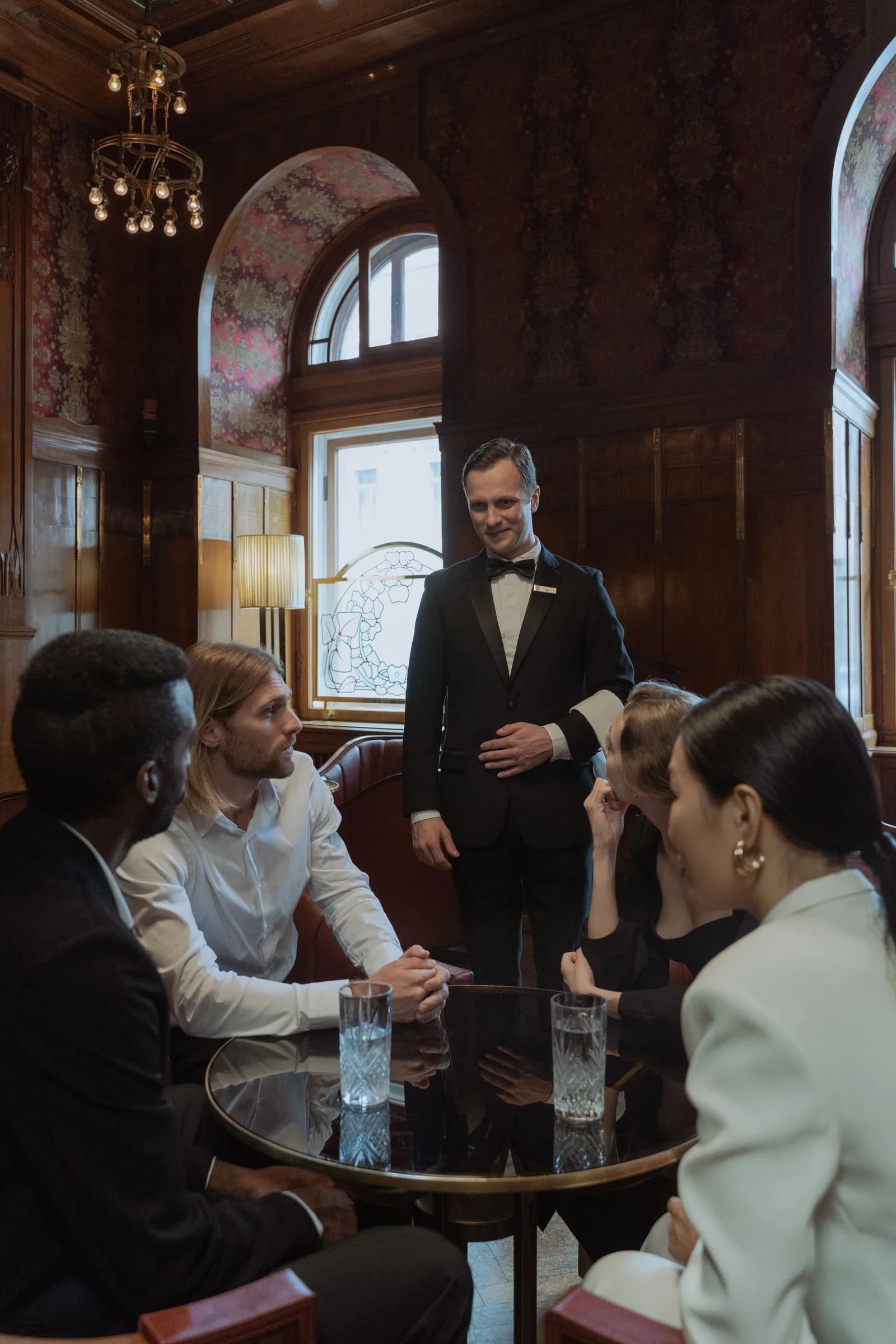
For hotels that want to give the guest the same standard from every person, in every department and on every shift.
The guest experiences one hotel, even though dozens of people may deliver it.
GEQA writes the service standards, trains the team on them during live service and gives managers a system for holding them — so the experience turns into upselling, reviews and repeat bookings.
- The standard
Two guests pay the same rate and get two different hotels.
Write the guest experience standards, department by department.
Every hotel has a standard. Most of the time it lives in the heads of the people who have been there longest, and it leaves the hotel the day they do. A rate is defensible only when the experience behind it is consistent.
- Arrival and departure
- Front office and reservations
- Restaurant and bar service
- Housekeeping and in-room delivery
What happens- Record the standard as it is today, area by area
- Map every guest-facing touchpoint
- Define the critical rituals that influence how a stay is remembered
- Write guest-experience standards specifically for this property
- Review every standard with management
You receive: The service standard written down for arrival and departure, the front office, the restaurant and housekeeping — precise enough that a new hire can read it and a manager can check it.
We measure: Revenue growth and direct bookings: how much more value the property generates from each stay, and how many more guests it moves to the direct channel.
Written for your hotel.
- The practice
A standard read in a classroom is a standard the floor never sees.
Train the team on those standards during live service.
The behaviour has to be practised in the conditions it has to survive: during service, with the team that will deliver it, on real guests and real situations.
What happens- Observe live service across different shifts
- Identify where the experience becomes inconsistent
- Practise the standard with the team during live service
- Refine anything that fails under real operating pressure
- Compare the results before and after the training
You receive: The team practised during service, on real guests and real situations, with the people who will deliver it every day.
We measure: Upselling and revenue generated, before the training and after it.
Tested inside your hotel.
- The system
By the time the problem reaches the reviews, the hotel has already lost value, reputation and revenue.
Build the quality control system and train the managers who run it.
Managers need more than a manual. They need to walk the floor, observe an interaction and know whether the standard was delivered. A complaint caught during the stay costs a conversation. The same complaint caught after checkout costs the review, and the bookings that review would have brought.
What happens- Create a practical quality checklist for each important touchpoint
- Define what good performance actually looks like
- Set the observation rhythm across shifts, nights and weekends
- Train managers to observe and coach
- Calibrate scoring between managers
- Create reporting short enough to be used consistently
You receive: an operational checklist the duty manager can complete in twenty minutes, on a defined cadence, with a record of every check carried out.
We measure: reviews, guest satisfaction, adherence to the standard, and how much those improvements turn into revenue for the hotel.
The standard becomes something management can see, coach and protect.
- Guest Intelligence & Revenue
Every piece of guest information can create a better experience. Every better experience can create additional revenue.
Know the guest before they arrive. Turn what you know into experience. Turn the experience into revenue.
The work begins with the booking.
Why is this guest coming? Who are they travelling with? Which room did they choose? Have they stayed before? What have they purchased in the past? Which preferences have they shared? What could make this stay more relevant to them?
That information becomes valuable when it reaches the right person at the right moment.
Before arrival, it can lead to a better room, a transfer, dinner, an experience or another hotel service. During the stay, it helps the team recognise the guest, anticipate needs and present offers that genuinely fit. After departure, it helps create the next stay and the next direct booking.
What happens- Map guest data from booking through post-stay
- Identify the information with real commercial value
- Build a useful guest profile before arrival
- Turn preferences and behaviour into service and sales opportunities
- Define relevant offers before and during the stay
- Move guest information to the departments that need it
- Build recognition and selling into operating sequences
- Create the path toward repeat stays and direct booking
You receive: a system that turns guest information into concrete actions before, during and after every stay.
We measure: revenue per guest, upselling, ancillary spend, repeat stays and direct bookings from existing guests.
From data to experience. From experience to revenue.
Your guest meets different people. They should always meet the same hotel.
A property can have beautiful rooms, an extraordinary location and capable people. The value of the experience, though, is decided every day in the hands of whoever delivers it.
- When that level becomes consistent, the guest feels it.
- When the team can recognise and use the opportunities in a stay, the hotel turns them into revenue.
- When managers can hold all of it over time, the result stays inside the property.
This is what should remain after DolceVita.
- A standard that lives in the team.
- An experience the guest recognises.
- A result the hotel can measure.
Start with the department where it matters most.
Bring the hotel and the part of the stay you are least sure of. We will look at what the standard is today and what it would take to hold it.
Your competitors hope you skip this form.
45 minutes with a senior strategist. We model your revenue leaks live and leave you a one-page plan — whether you hire us or not.
- No pitch deck — a working session
- Named senior strategist, not a sales rep
- You keep the plan either way
 Kledis Brahimi · Founder & Lead ConsultantReplies personally, usually within one business day
About you
So I know whose hotel we are looking at.