




Spring Hotels' acquisition and near-doubling of its property portfolio following the Mare Nostrum purchase marks a critical inflection in how mid-market European operators are now competing through rapid asset consolidation rather than organic development. Unlike last week's signal (international luxury brands treating secondary Asian markets as destination anchors), this week's movement reveals that European operators face inverse pressure: they must achieve scale in their home markets to defend against both international brand encroachment and the fragmentation of independent inventory across multiple ownership structures. The Spanish operator's inventory expansion—achieved in twelve months rather than the typical 3–5 year development cycle—indicates that acquisition-driven consolidation is now the primary capital deployment mechanism for operators seeking to achieve distribution density and operational leverage before larger chains (Marriott, IHG, Hyatt) complete their own Mediterranean fill-in strategies. For hotel investors, this signals that standalone properties and small chains in Spain, Portugal, and Greece now face a narrowing window to either consolidate upward into larger platforms or accept permanent disadvantage in digital distribution, revenue management sophistication, and brand partnership economics. The coming months will reward operators who recognize that scale in mature European markets is no longer optional—it is the prerequisite for accessing modern capital, talent, and technology infrastructure.
Thai AirAsia's exploration of regional flight routes to Hua Hin, executed in partnership with Thailand's Tourism Authority, signals that low-cost carriers are now treating secondary city connectivity as a structural response to primary gateway saturation rather than a supplementary growth vector. Unlike last week's LATAM signal (loyalty networks creating recurring revenue independent of seat yield), this week's development reveals that Asian LCCs face an inverse constraint: they must expand beyond Bangkok and Phuket because those airports now operate at or near capacity utilization, forcing carriers to either cannibalize existing routes or develop new city pairs that bypass congested hubs. Thai AirAsia's Hua Hin strategy matters because it creates a direct feeder system to beach resorts and secondary destination hotels that have historically depended on ground transportation from Bangkok—a friction point that reduced frequency and increased customer acquisition costs for hospitality properties in regional markets. By establishing direct air access to Hua Hin, the carrier simultaneously reduces hotel booking friction, lowers the effective price of regional stays (by eliminating 2–3 hours of ground transfer), and creates a new distribution channel for properties that previously competed only within the Bangkok-centric travel ecosystem. We expect the coming months to see competitive responses from AirAsia's rivals (Nok Air, Thai Lion) targeting alternative secondary gateways, which will accelerate the fragmentation of Thai tourism away from Bangkok and create new revenue opportunities for operators positioned in Phuket, Chiang Mai, and secondary beach destinations.
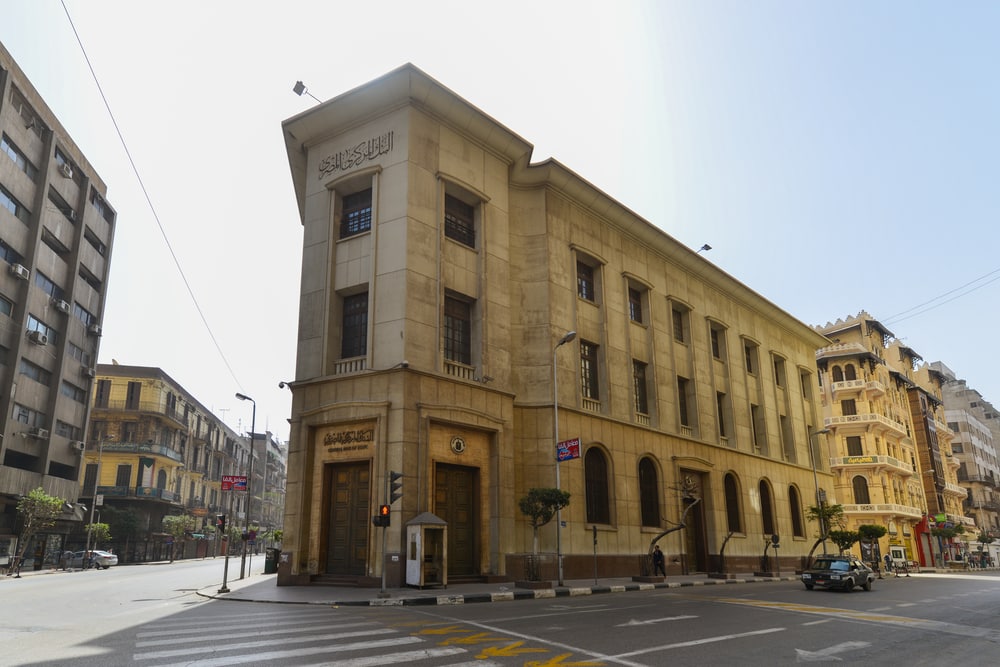
Talaat Moustafa Group's H1 2026 sales of $4.45 billion (up 3.8% year-over-year) demonstrate that Egyptian real estate developers are maintaining capital formation velocity despite macroeconomic headwinds, signaling sustained investor confidence in the country's hospitality-linked mixed-use development pipeline. Unlike last week's signal (Egypt's state IPO program creating transparent market-based capital formation), TMG's performance reveals that private developers are matching government-driven monetization with their own record sales velocity, creating a dual-track capital formation system where both state and private actors are simultaneously deploying capital into hospitality real estate. TMG's second-quarter performance—described as a record—indicates that the developer is maintaining pricing power and sales velocity even as interest rates remain elevated and regional geopolitical risks persist, suggesting that international and regional capital is now treating Egyptian hospitality-linked real estate as a structural allocation category rather than a cyclical opportunity. For hospitality operators and investors, TMG's sustained momentum matters because it signals that the Egyptian market now has sufficient capital formation infrastructure (both public and private) to support large-scale, multi-year hotel development programs without execution risk tied to financing gaps or developer insolvency. The coming months will test whether TMG's sales velocity persists through the second half of 2026, which will determine whether Egypt's hospitality expansion is driven by genuine demand or by front-loading of sales ahead of potential macroeconomic deterioration; operators should monitor TMG's Q3 and Q4 guidance closely as a leading indicator of capital formation sustainability.
Croatia's emphasis on lesser-known island destinations—combining ancient villages, dramatic landscapes, and crystal-clear seas—signals that luxury operators and travel platforms are now actively repositioning secondary Mediterranean geographies as primary alternatives to saturated coastal markets in Spain, Greece, and southern Italy. This positioning differs from last week's Minor Hotels signal (wellness as a standalone profit center) by revealing that destination-level brand building is now a primary competitive lever for regions seeking to capture affluent travelers who perceive mainstream Mediterranean destinations as commoditized. Croatian islands offer a distinct value proposition: they combine Mediterranean authenticity with lower visitor density than Santorini or the Amalfi Coast, creating a premium positioning that justifies luxury pricing without requiring the operational complexity of ultra-luxury resort development. For luxury operators and hospitality investors, Croatia's emergence matters because it creates a new portfolio anchor geography where operators can develop 150–300 room properties at luxury price points ($400–600 nightly rates) without competing directly against established five-star chains in saturated markets. The coming months will determine whether this repositioning gains traction among affluent travelers aged 45–65 (the primary demographic for Mediterranean luxury), which will either validate Croatian islands as a structural growth market or reveal that the positioning remains a niche play dependent on travel media amplification rather than genuine customer demand.
The AI Hospitality Alliance's 2026 member survey demonstrates that hospitality stakeholders are now shifting from abstract governance discussions toward pragmatic implementation guidance—indicating that the industry has moved beyond the pre-regulatory standard-setting phase and is now focused on operational deployment challenges. Unlike last week's signal (AIHA establishing self-regulatory frameworks before government mandates), this week's development reveals that operators face a different bottleneck: they understand the need for responsible AI but lack practical guidance on how to integrate AI systems into revenue management, labor scheduling, and customer service operations without creating execution risk or operational disruption. The survey data signals that operators are now asking implementation questions (How do we deploy AI without degrading customer experience? How do we train staff to work alongside AI systems? How do we manage data privacy in real-time revenue management?) rather than governance questions (What standards should we adopt? What compliance frameworks should we build?), indicating a maturation of the industry's AI adoption readiness. For technology vendors and hospitality operators, this shift matters because it creates a market opportunity for implementation-focused consulting, staff training programs, and AI-to-operations integration services that address the gap between AI capability and operational deployment. We expect the coming months to see AIHA pivot from standard-setting toward best-practice documentation and case studies that demonstrate how leading operators have successfully integrated AI into core revenue and operations functions, which will accelerate adoption across mid-market and smaller operators who currently lack in-house AI expertise.
The sixth edition of the Traveling for Happiness Awards signals that sustainability recognition programs are now functioning as a primary brand differentiation and market positioning tool for hospitality operators seeking to capture affluent, values-aligned travelers. Unlike last week's Iberostar signal (operators positioning themselves as primary actors in environmental governance through research partnerships), this week's development reveals that operators are translating environmental commitments into concrete, measurable operational changes that generate immediate brand value and customer loyalty benefits. The awards program's expansion and recognition across multiple editions indicates that hospitality operators now perceive sustainability not as a compliance cost or reputational hedge, but as a direct revenue lever that attracts higher-spending, lower-churn customer segments and justifies premium pricing. For hospitality investors and operators, the Traveling for Happiness framework matters because it provides a standardized, third-party validated sustainability positioning that allows mid-market and independent properties to compete against international chains on values-alignment without requiring the capital intensity of net-zero infrastructure investments. The coming months will likely see increased operator participation in sustainability award programs and accelerated integration of sustainability narratives into marketing and distribution strategies, which will create a competitive dynamic where non-participating operators face increasing perception disadvantage among affluent, environmentally conscious travelers—particularly in European and North American source markets where sustainability values drive booking decisions for 35–50% of luxury leisure travelers.
The convergence of three distinct regional movements—Spring Hotels' Mediterranean consolidation signaling that European operators must achieve scale through acquisition, Thai AirAsia's secondary gateway expansion fragmenting Asian tourism distribution away from primary hubs, and TMG's sustained sales velocity validating Egypt's dual-track capital formation system—creates fundamentally different competitive dynamics across three critical hospitality markets through the coming months and into 2027. European operators face a consolidation imperative: standalone and small-chain properties will face simultaneous pressure from acquisition-focused competitors, international brand expansion, and distribution disadvantage unless they achieve scale through M&A or strategic partnerships before the window for favorable acquisition multiples closes. Asian operators face a distribution opportunity: properties positioned in secondary gateways (Hua Hin, Chiang Mai, secondary Thai islands) will benefit from improved air connectivity and reduced customer acquisition friction, while Bangkok-centric operators will face margin compression as carriers fragment capacity away from primary hubs. Egyptian operators and investors face a capital formation advantage: the combination of private developer momentum (TMG) and public market infrastructure (state IPO programs) creates a rare window where hospitality-linked real estate can attract institutional capital at lower cost of capital than competing emerging markets, rewarding developers and operators who can deploy capital into large-scale, multi-year projects before regional competition intensifies. The regional winners through 2027 will be European consolidators who achieve critical mass before acquisition multiples compress, Asian secondary-market operators who can capture the first wave of gateway-fragmentation demand, and Egyptian developers who deploy capital before the capital formation window narrows—while losers will be fragmented European independents, primary-hub Asian operators facing capacity cannibalization, and Egyptian operators who delay capital deployment waiting for improved macroeconomic conditions that may not materialize.
Get the full market intelligence reports delivered weekly.
Spring Hotels' acquisition and near-doubling of its property portfolio following the Mare Nostrum purchase marks a critical inflection in how mid-market European operators are now competing through rapid asset consolidation rather than organic development. Unlike last week's signal (international luxury brands treating secondary Asian markets as destination anchors), this week's movement reveals that European operators face inverse pressure: they must achieve scale in their home markets to defend against both international brand encroachment and the fragmentation of independent inventory across multiple ownership structures. The Spanish operator's inventory expansion—achieved in twelve months rather than the typical 3–5 year development cycle—indicates that acquisition-driven consolidation is now the primary capital deployment mechanism for operators seeking to achieve distribution density and operational leverage before larger chains (Marriott, IHG, Hyatt) complete their own Mediterranean fill-in strategies. For hotel investors, this signals that standalone properties and small chains in Spain, Portugal, and Greece now face a narrowing window to either consolidate upward into larger platforms or accept permanent disadvantage in digital distribution, revenue management sophistication, and brand partnership economics. The coming months will reward operators who recognize that scale in mature European markets is no longer optional—it is the prerequisite for accessing modern capital, talent, and technology infrastructure.
Thai AirAsia's exploration of regional flight routes to Hua Hin, executed in partnership with Thailand's Tourism Authority, signals that low-cost carriers are now treating secondary city connectivity as a structural response to primary gateway saturation rather than a supplementary growth vector. Unlike last week's LATAM signal (loyalty networks creating recurring revenue independent of seat yield), this week's development reveals that Asian LCCs face an inverse constraint: they must expand beyond Bangkok and Phuket because those airports now operate at or near capacity utilization, forcing carriers to either cannibalize existing routes or develop new city pairs that bypass congested hubs. Thai AirAsia's Hua Hin strategy matters because it creates a direct feeder system to beach resorts and secondary destination hotels that have historically depended on ground transportation from Bangkok—a friction point that reduced frequency and increased customer acquisition costs for hospitality properties in regional markets. By establishing direct air access to Hua Hin, the carrier simultaneously reduces hotel booking friction, lowers the effective price of regional stays (by eliminating 2–3 hours of ground transfer), and creates a new distribution channel for properties that previously competed only within the Bangkok-centric travel ecosystem. We expect the coming months to see competitive responses from AirAsia's rivals (Nok Air, Thai Lion) targeting alternative secondary gateways, which will accelerate the fragmentation of Thai tourism away from Bangkok and create new revenue opportunities for operators positioned in Phuket, Chiang Mai, and secondary beach destinations.
Talaat Moustafa Group's H1 2026 sales of $4.45 billion (up 3.8% year-over-year) demonstrate that Egyptian real estate developers are maintaining capital formation velocity despite macroeconomic headwinds, signaling sustained investor confidence in the country's hospitality-linked mixed-use development pipeline. Unlike last week's signal (Egypt's state IPO program creating transparent market-based capital formation), TMG's performance reveals that private developers are matching government-driven monetization with their own record sales velocity, creating a dual-track capital formation system where both state and private actors are simultaneously deploying capital into hospitality real estate. TMG's second-quarter performance—described as a record—indicates that the developer is maintaining pricing power and sales velocity even as interest rates remain elevated and regional geopolitical risks persist, suggesting that international and regional capital is now treating Egyptian hospitality-linked real estate as a structural allocation category rather than a cyclical opportunity. For hospitality operators and investors, TMG's sustained momentum matters because it signals that the Egyptian market now has sufficient capital formation infrastructure (both public and private) to support large-scale, multi-year hotel development programs without execution risk tied to financing gaps or developer insolvency. The coming months will test whether TMG's sales velocity persists through the second half of 2026, which will determine whether Egypt's hospitality expansion is driven by genuine demand or by front-loading of sales ahead of potential macroeconomic deterioration; operators should monitor TMG's Q3 and Q4 guidance closely as a leading indicator of capital formation sustainability.
Croatia's emphasis on lesser-known island destinations—combining ancient villages, dramatic landscapes, and crystal-clear seas—signals that luxury operators and travel platforms are now actively repositioning secondary Mediterranean geographies as primary alternatives to saturated coastal markets in Spain, Greece, and southern Italy. This positioning differs from last week's Minor Hotels signal (wellness as a standalone profit center) by revealing that destination-level brand building is now a primary competitive lever for regions seeking to capture affluent travelers who perceive mainstream Mediterranean destinations as commoditized. Croatian islands offer a distinct value proposition: they combine Mediterranean authenticity with lower visitor density than Santorini or the Amalfi Coast, creating a premium positioning that justifies luxury pricing without requiring the operational complexity of ultra-luxury resort development. For luxury operators and hospitality investors, Croatia's emergence matters because it creates a new portfolio anchor geography where operators can develop 150–300 room properties at luxury price points ($400–600 nightly rates) without competing directly against established five-star chains in saturated markets. The coming months will determine whether this repositioning gains traction among affluent travelers aged 45–65 (the primary demographic for Mediterranean luxury), which will either validate Croatian islands as a structural growth market or reveal that the positioning remains a niche play dependent on travel media amplification rather than genuine customer demand.
The AI Hospitality Alliance's 2026 member survey demonstrates that hospitality stakeholders are now shifting from abstract governance discussions toward pragmatic implementation guidance—indicating that the industry has moved beyond the pre-regulatory standard-setting phase and is now focused on operational deployment challenges. Unlike last week's signal (AIHA establishing self-regulatory frameworks before government mandates), this week's development reveals that operators face a different bottleneck: they understand the need for responsible AI but lack practical guidance on how to integrate AI systems into revenue management, labor scheduling, and customer service operations without creating execution risk or operational disruption. The survey data signals that operators are now asking implementation questions (How do we deploy AI without degrading customer experience? How do we train staff to work alongside AI systems? How do we manage data privacy in real-time revenue management?) rather than governance questions (What standards should we adopt? What compliance frameworks should we build?), indicating a maturation of the industry's AI adoption readiness. For technology vendors and hospitality operators, this shift matters because it creates a market opportunity for implementation-focused consulting, staff training programs, and AI-to-operations integration services that address the gap between AI capability and operational deployment. We expect the coming months to see AIHA pivot from standard-setting toward best-practice documentation and case studies that demonstrate how leading operators have successfully integrated AI into core revenue and operations functions, which will accelerate adoption across mid-market and smaller operators who currently lack in-house AI expertise.
The sixth edition of the Traveling for Happiness Awards signals that sustainability recognition programs are now functioning as a primary brand differentiation and market positioning tool for hospitality operators seeking to capture affluent, values-aligned travelers. Unlike last week's Iberostar signal (operators positioning themselves as primary actors in environmental governance through research partnerships), this week's development reveals that operators are translating environmental commitments into concrete, measurable operational changes that generate immediate brand value and customer loyalty benefits. The awards program's expansion and recognition across multiple editions indicates that hospitality operators now perceive sustainability not as a compliance cost or reputational hedge, but as a direct revenue lever that attracts higher-spending, lower-churn customer segments and justifies premium pricing. For hospitality investors and operators, the Traveling for Happiness framework matters because it provides a standardized, third-party validated sustainability positioning that allows mid-market and independent properties to compete against international chains on values-alignment without requiring the capital intensity of net-zero infrastructure investments. The coming months will likely see increased operator participation in sustainability award programs and accelerated integration of sustainability narratives into marketing and distribution strategies, which will create a competitive dynamic where non-participating operators face increasing perception disadvantage among affluent, environmentally conscious travelers—particularly in European and North American source markets where sustainability values drive booking decisions for 35–50% of luxury leisure travelers.
The convergence of three distinct regional movements—Spring Hotels' Mediterranean consolidation signaling that European operators must achieve scale through acquisition, Thai AirAsia's secondary gateway expansion fragmenting Asian tourism distribution away from primary hubs, and TMG's sustained sales velocity validating Egypt's dual-track capital formation system—creates fundamentally different competitive dynamics across three critical hospitality markets through the coming months and into 2027. European operators face a consolidation imperative: standalone and small-chain properties will face simultaneous pressure from acquisition-focused competitors, international brand expansion, and distribution disadvantage unless they achieve scale through M&A or strategic partnerships before the window for favorable acquisition multiples closes. Asian operators face a distribution opportunity: properties positioned in secondary gateways (Hua Hin, Chiang Mai, secondary Thai islands) will benefit from improved air connectivity and reduced customer acquisition friction, while Bangkok-centric operators will face margin compression as carriers fragment capacity away from primary hubs. Egyptian operators and investors face a capital formation advantage: the combination of private developer momentum (TMG) and public market infrastructure (state IPO programs) creates a rare window where hospitality-linked real estate can attract institutional capital at lower cost of capital than competing emerging markets, rewarding developers and operators who can deploy capital into large-scale, multi-year projects before regional competition intensifies. The regional winners through 2027 will be European consolidators who achieve critical mass before acquisition multiples compress, Asian secondary-market operators who can capture the first wave of gateway-fragmentation demand, and Egyptian developers who deploy capital before the capital formation window narrows—while losers will be fragmented European independents, primary-hub Asian operators facing capacity cannibalization, and Egyptian operators who delay capital deployment waiting for improved macroeconomic conditions that may not materialize.
Published 7d ago
Talaat Moustafa Group (TMG) reported first-half 2026 sales of $4.45 billion (EGP 219.1 billion), up 3.8% from $4.3 billion (EGP 211 billion) a year earlier, as record second-quarter performance and strong demand for key projects supported growth.TMG's H1 salesTMG said it generated $3.45 billion (EGP 170 billion) in sales during the second quarter, its strongest quarterly performance on record, up 27.8% compared with $2.7 billion (EGP 133 billion) in the same period of 2025, according to ...


Published 8d ago
Precious metals recouped a portion of their recent losses during the first week of July after softer-than-expected US employment data lowered expectations for a Federal Reserve rate hike in September, ending a multi-week losing streak.The rebound, however, was insufficient to offset June’s sharp selloff, when all four major precious metals recorded significant monthly declines amid a stronger US dollar, higher Treasury yields, and expectations that US monetary policy would remain restrictive....


Published 9d ago
S&P Global's UAE Purchasing Managers’ Index (PMI) fell from 52.6 in May to 50.8 in June, amid headwinds from the Middle East conflict, which continued to weigh on the domestic non-oil private sector. Non-oil private sectorThe seasonally adjusted PMI in June remained above the 50 baseline that separates economic growth from contraction. The UAE non-oil private sector experienced its weakest expansion in over five years during June, according to S&P Global on Friday. June’s challen...


Published 10d ago
Il turismo accessibile non è un tema astratto. Per molte famiglie partire per un viaggio significa fare i conti con il budget, scegliere una meta, prenotare e preparare le valigie. Per altre, invece, ogni spostamento richiede un’organizzazione molto più complessa: ausili, farmaci, carrozzine, dispositivi medici, tempi di assistenza e tante cautele. Anche per questo, una L'articolo Fondazione Don Gnocchi e Garden Toscana Resort: una vacanza che racconta il turismo accessibile sembra essere il ...


Published 10d ago
Two people in a small Volkswagen Beetle died after the massive battery-powered truck slammed into them at a highway intersection in Nevada, not far from the factory that builds it.Tesla’s new electric Semi was involved in a crash earlier this week that killed two people, the first known fatal accident involving the carmaker’s newest model, which just went into regular production this year.According to reports from the Nevada Highway Patrol and Lyon County Sheriff’s Department, the 10-ton Tesl...


Published 12d ago
From a less-crowded camino and the Slovenian Alps to a stunning river trail and Ireland’s remote Beara peninsula Distance up to 74 milesDuration 3-9 days Continue reading...


Published 6d ago
PHUKET, 6 July 2026: Travel + Leisure Co. (NYSE:TNL) has relaunched the former Wyndham Sea Pearl Resort Phuket following a transformation and repositioning, unveiling a new identity as Club Wyndham Patong Hill Phuket. The resort debuts as a new premium offering and is the first Club Wyndham-branded resort in Thailand. The leading leisure travel company […] The post T+L leads relaunch of Phuket resort appeared first on TTR Weekly.


Published 6d ago
KUALA LUMPUR, 6 July 2026: The Malaysian Association of Tour and Travel Agents (MATTA) hosted the 2nd edition of the MATTA Muslim Friendly Travel Fair (MFTF 2026) at the World Trade Centre Kuala Lumpur (WTC KL), 4 to 5 July. Visiting the event, YB Dato Sri Tiong King Sing, Minister of Tourism, Arts and Culture […] The post MFTF’s second edition stands on a firm footing appeared first on TTR Weekly.


-antler-raffia-hero-image-june-2026-pr.jpg)


.jpg)


News aggregated from leading international sources. Click any article to read the full story.