




DolceVita
AboutConsultingDolceVita MethodTrainingNewsMarket Intelligence
ENITAR
Get in Touch
DolceVitainfo@dolcevitahospitality.com

Company

AboutConsultingContactFAQ

Intelligence

Market IntelligenceNewsBlog

Markets

RomeMilanDubaiRiyadhLondonParis

© 2026 DolceVita Hospitality. All rights reserved.

TermsPrivacy
The DolceVita

Market Intelligence

Week of July 6, 2026

Hotels & Resorts
Lead SignalHotels & Resorts

Spring Hotels doubles inventory, signals consolidation acceleration in Mediterranean

Spring Hotels' acquisition and near-doubling of its property portfolio following the Mare Nostrum purchase marks a critical inflection in how mid-market European operators are now competing through rapid asset consolidation rather than organic development. Unlike last week's signal (international luxury brands treating secondary Asian markets as destination anchors), this week's movement reveals that European operators face inverse pressure: they must achieve scale in their home markets to defend against both international brand encroachment and the fragmentation of independent inventory across multiple ownership structures. The Spanish operator's inventory expansion—achieved in twelve months rather than the typical 3–5 year development cycle—indicates that acquisition-driven consolidation is now the primary capital deployment mechanism for operators seeking to achieve distribution density and operational leverage before larger chains (Marriott, IHG, Hyatt) complete their own Mediterranean fill-in strategies. For hotel investors, this signals that standalone properties and small chains in Spain, Portugal, and Greece now face a narrowing window to either consolidate upward into larger platforms or accept permanent disadvantage in digital distribution, revenue management sophistication, and brand partnership economics. The coming months will reward operators who recognize that scale in mature European markets is no longer optional—it is the prerequisite for accessing modern capital, talent, and technology infrastructure.

Airlines & Travel
02Airlines & Travel

Thai AirAsia targets secondary gateway expansion beyond Bangkok congestion

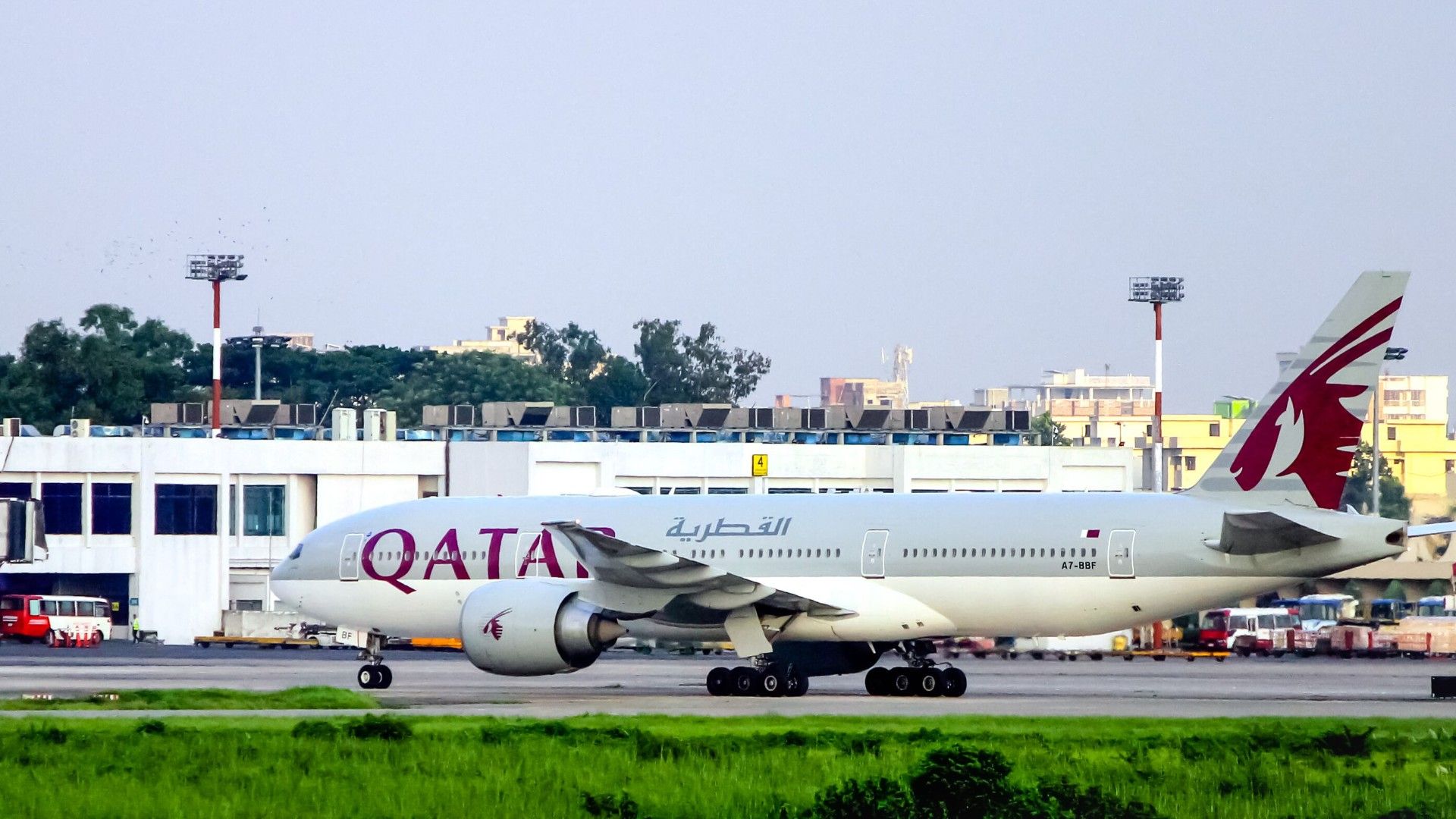
Thai AirAsia's exploration of regional flight routes to Hua Hin, executed in partnership with Thailand's Tourism Authority, signals that low-cost carriers are now treating secondary city connectivity as a structural response to primary gateway saturation rather than a supplementary growth vector. Unlike last week's LATAM signal (loyalty networks creating recurring revenue independent of seat yield), this week's development reveals that Asian LCCs face an inverse constraint: they must expand beyond Bangkok and Phuket because those airports now operate at or near capacity utilization, forcing carriers to either cannibalize existing routes or develop new city pairs that bypass congested hubs. Thai AirAsia's Hua Hin strategy matters because it creates a direct feeder system to beach resorts and secondary destination hotels that have historically depended on ground transportation from Bangkok—a friction point that reduced frequency and increased customer acquisition costs for hospitality properties in regional markets. By establishing direct air access to Hua Hin, the carrier simultaneously reduces hotel booking friction, lowers the effective price of regional stays (by eliminating 2–3 hours of ground transfer), and creates a new distribution channel for properties that previously competed only within the Bangkok-centric travel ecosystem. We expect the coming months to see competitive responses from AirAsia's rivals (Nok Air, Thai Lion) targeting alternative secondary gateways, which will accelerate the fragmentation of Thai tourism away from Bangkok and create new revenue opportunities for operators positioned in Phuket, Chiang Mai, and secondary beach destinations.

Investment & Deals
03Investment & Deals

Talaat Moustafa posts record H1 sales; Egyptian developer signals sustained capital formation momentum

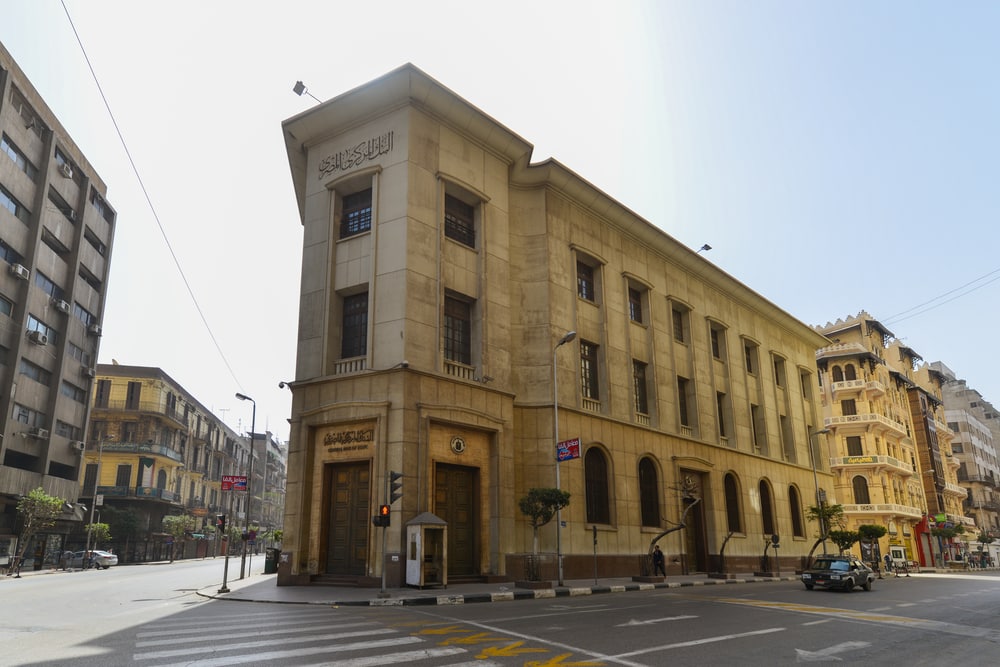
Talaat Moustafa Group's H1 2026 sales of $4.45 billion (up 3.8% year-over-year) demonstrate that Egyptian real estate developers are maintaining capital formation velocity despite macroeconomic headwinds, signaling sustained investor confidence in the country's hospitality-linked mixed-use development pipeline. Unlike last week's signal (Egypt's state IPO program creating transparent market-based capital formation), TMG's performance reveals that private developers are matching government-driven monetization with their own record sales velocity, creating a dual-track capital formation system where both state and private actors are simultaneously deploying capital into hospitality real estate. TMG's second-quarter performance—described as a record—indicates that the developer is maintaining pricing power and sales velocity even as interest rates remain elevated and regional geopolitical risks persist, suggesting that international and regional capital is now treating Egyptian hospitality-linked real estate as a structural allocation category rather than a cyclical opportunity. For hospitality operators and investors, TMG's sustained momentum matters because it signals that the Egyptian market now has sufficient capital formation infrastructure (both public and private) to support large-scale, multi-year hotel development programs without execution risk tied to financing gaps or developer insolvency. The coming months will test whether TMG's sales velocity persists through the second half of 2026, which will determine whether Egypt's hospitality expansion is driven by genuine demand or by front-loading of sales ahead of potential macroeconomic deterioration; operators should monitor TMG's Q3 and Q4 guidance closely as a leading indicator of capital formation sustainability.

Luxury
04Luxury

Croatia's island positioning emerges as Mediterranean alternative to saturated Adriatic coastal markets

Croatia's emphasis on lesser-known island destinations—combining ancient villages, dramatic landscapes, and crystal-clear seas—signals that luxury operators and travel platforms are now actively repositioning secondary Mediterranean geographies as primary alternatives to saturated coastal markets in Spain, Greece, and southern Italy. This positioning differs from last week's Minor Hotels signal (wellness as a standalone profit center) by revealing that destination-level brand building is now a primary competitive lever for regions seeking to capture affluent travelers who perceive mainstream Mediterranean destinations as commoditized. Croatian islands offer a distinct value proposition: they combine Mediterranean authenticity with lower visitor density than Santorini or the Amalfi Coast, creating a premium positioning that justifies luxury pricing without requiring the operational complexity of ultra-luxury resort development. For luxury operators and hospitality investors, Croatia's emergence matters because it creates a new portfolio anchor geography where operators can develop 150–300 room properties at luxury price points ($400–600 nightly rates) without competing directly against established five-star chains in saturated markets. The coming months will determine whether this repositioning gains traction among affluent travelers aged 45–65 (the primary demographic for Mediterranean luxury), which will either validate Croatian islands as a structural growth market or reveal that the positioning remains a niche play dependent on travel media amplification rather than genuine customer demand.

Technology
05Technology

AI Hospitality Alliance survey reveals operator demand for practical deployment guidance, not regulatory frameworks

The AI Hospitality Alliance's 2026 member survey demonstrates that hospitality stakeholders are now shifting from abstract governance discussions toward pragmatic implementation guidance—indicating that the industry has moved beyond the pre-regulatory standard-setting phase and is now focused on operational deployment challenges. Unlike last week's signal (AIHA establishing self-regulatory frameworks before government mandates), this week's development reveals that operators face a different bottleneck: they understand the need for responsible AI but lack practical guidance on how to integrate AI systems into revenue management, labor scheduling, and customer service operations without creating execution risk or operational disruption. The survey data signals that operators are now asking implementation questions (How do we deploy AI without degrading customer experience? How do we train staff to work alongside AI systems? How do we manage data privacy in real-time revenue management?) rather than governance questions (What standards should we adopt? What compliance frameworks should we build?), indicating a maturation of the industry's AI adoption readiness. For technology vendors and hospitality operators, this shift matters because it creates a market opportunity for implementation-focused consulting, staff training programs, and AI-to-operations integration services that address the gap between AI capability and operational deployment. We expect the coming months to see AIHA pivot from standard-setting toward best-practice documentation and case studies that demonstrate how leading operators have successfully integrated AI into core revenue and operations functions, which will accelerate adoption across mid-market and smaller operators who currently lack in-house AI expertise.

Sustainability
06Sustainability

Traveling for Happiness Awards recognize operational sustainability initiatives as market differentiation mechanism

The sixth edition of the Traveling for Happiness Awards signals that sustainability recognition programs are now functioning as a primary brand differentiation and market positioning tool for hospitality operators seeking to capture affluent, values-aligned travelers. Unlike last week's Iberostar signal (operators positioning themselves as primary actors in environmental governance through research partnerships), this week's development reveals that operators are translating environmental commitments into concrete, measurable operational changes that generate immediate brand value and customer loyalty benefits. The awards program's expansion and recognition across multiple editions indicates that hospitality operators now perceive sustainability not as a compliance cost or reputational hedge, but as a direct revenue lever that attracts higher-spending, lower-churn customer segments and justifies premium pricing. For hospitality investors and operators, the Traveling for Happiness framework matters because it provides a standardized, third-party validated sustainability positioning that allows mid-market and independent properties to compete against international chains on values-alignment without requiring the capital intensity of net-zero infrastructure investments. The coming months will likely see increased operator participation in sustainability award programs and accelerated integration of sustainability narratives into marketing and distribution strategies, which will create a competitive dynamic where non-participating operators face increasing perception disadvantage among affluent, environmentally conscious travelers—particularly in European and North American source markets where sustainability values drive booking decisions for 35–50% of luxury leisure travelers.

Future Outlook
07Future Outlook

Mediterranean consolidation, Asian gateway fragmentation, and Egyptian capital formation create divergent regional opportunities through 2027

The convergence of three distinct regional movements—Spring Hotels' Mediterranean consolidation signaling that European operators must achieve scale through acquisition, Thai AirAsia's secondary gateway expansion fragmenting Asian tourism distribution away from primary hubs, and TMG's sustained sales velocity validating Egypt's dual-track capital formation system—creates fundamentally different competitive dynamics across three critical hospitality markets through the coming months and into 2027. European operators face a consolidation imperative: standalone and small-chain properties will face simultaneous pressure from acquisition-focused competitors, international brand expansion, and distribution disadvantage unless they achieve scale through M&A or strategic partnerships before the window for favorable acquisition multiples closes. Asian operators face a distribution opportunity: properties positioned in secondary gateways (Hua Hin, Chiang Mai, secondary Thai islands) will benefit from improved air connectivity and reduced customer acquisition friction, while Bangkok-centric operators will face margin compression as carriers fragment capacity away from primary hubs. Egyptian operators and investors face a capital formation advantage: the combination of private developer momentum (TMG) and public market infrastructure (state IPO programs) creates a rare window where hospitality-linked real estate can attract institutional capital at lower cost of capital than competing emerging markets, rewarding developers and operators who can deploy capital into large-scale, multi-year projects before regional competition intensifies. The regional winners through 2027 will be European consolidators who achieve critical mass before acquisition multiples compress, Asian secondary-market operators who can capture the first wave of gateway-fragmentation demand, and Egyptian developers who deploy capital before the capital formation window narrows—while losers will be fragmented European independents, primary-hub Asian operators facing capacity cannibalization, and Egyptian operators who delay capital deployment waiting for improved macroeconomic conditions that may not materialize.

Previous Edition

Last Week’s Signals

Week of June 29, 2026

7 signals · click to expand
Hotels & Resorts

Malaysia's Waldorf Astoria signals branded luxury's regional consolidation

Malaysia's debut Waldorf Astoria, opening late 2026, marks a structural inflection in how international luxury operators are now treating Southeast Asian secondary markets as primary portfolio anchors rather than opportunistic fill-in properties. The property's late-cycle positioning—arriving as Hyatt and IHG simultaneously accelerate Italian expansion with seven new projects—reveals a deliberate geographic rebalancing: European operators are defending saturated Mediterranean markets with volume plays (Hyatt and IHG in Italy), while American-anchored luxury brands are now treating Malaysia, Thailand, and Indonesia as destination-tier markets capable of sustaining €300+ nightly rate architecture and international clientele density. The Waldorf Astoria's spa and dining concepts signal that the brand is not importing a standardized product but instead designing regionally calibrated luxury that acknowledges local wellness traditions and culinary expectations—a departure from the cookie-cutter international luxury playbook that dominated the region a decade ago. For operators, the signal is unambiguous: branded luxury in Southeast Asia is no longer a secondary growth play but a core yield engine, and properties that fail to localize their F&B and wellness offerings will face occupancy compression against culturally attuned competitors. We expect the coming months to accelerate this trend as Marriott, Hilton, and Accor all push deeper into Thailand and Vietnam with similarly localized luxury positioning.

Week of June 29, 2026Read more
Airlines & Travel

LATAM's loyalty architecture becomes competitive moat in regional consolidation

LATAM Airlines' wide-reaching loyalty network now functions as a structural competitive advantage in a South American market where carrier consolidation is reshaping regional airlift patterns and route economics. Unlike North American carriers (Southwest, Delta, American) that compete primarily on route density and frequency, LATAM's loyalty membership creates a recurring revenue stream and customer lock-in mechanism that operates independently of seat yield—a distinction that matters enormously when regional carriers face margin compression from new capacity and currency volatility. The carrier's loyalty program generates predictable ancillary revenue while simultaneously reducing customer acquisition costs for new routes and frequency additions; when a passenger holds LATAM elite status, the carrier can deploy that customer across new markets with lower booking friction than competitors offering commodity seat products. For hospitality operators in South America, LATAM's loyalty dominance signals that airline partnerships will increasingly flow through loyalty-anchored distribution channels rather than traditional GDS bookings; properties that can integrate with LATAM's loyalty ecosystem (offering status-tier benefits, co-branded packages, or exclusive room inventory) will capture disproportionate share of the carrier's high-value customer base. We anticipate that the coming months will see accelerated partnerships between South American luxury properties and LATAM, as both parties recognize that loyalty-based distribution outperforms traditional travel agency and OTA channels in the region.

Week of June 29, 2026Read more
Investment & Deals

Egypt's state asset monetization accelerates hospitality-anchored infrastructure plays

Egypt's temporary listing of four state-owned companies on the Egyptian Exchange (EGX) signals that the government is now systematizing asset monetization across sectors, creating a structural opportunity for hospitality-linked real estate to attract institutional capital through public markets rather than bilateral partnerships. The state IPO program represents a policy shift from ad-hoc foreign direct investment solicitation toward transparent, market-based capital formation—a framework that reduces execution risk for international operators and sovereign wealth funds considering large-scale commitments to the Egyptian market. When government assets become tradeable on public exchanges, the downstream effect is accelerated due diligence, standardized reporting, and regulatory clarity that lower the cost of capital for hospitality developers; a property developer that can anchor a mixed-use project with a government-backed hospitality component now has a clearer path to institutional funding than operators relying on bilateral negotiations with individual ministries. The significance for dealmakers is immediate: properties and projects that can incorporate public-market-listed assets (government land, infrastructure concessions, or hospitality anchors) will attract lower-cost capital and faster execution timelines than purely private developments. We expect the coming months to generate a wave of hospitality-anchored mixed-use announcements in Cairo and Alexandria, as developers and operators recognize that the state IPO program has fundamentally de-risked the Egyptian market for large-scale institutional commitments.

Week of June 29, 2026Read more
Luxury

Minor Hotels' wellness commercial director signals portfolio-wide monetization of wellness

Minor Hotels' appointment of Aditya Saluja as Chief Commercial Officer for Wellness indicates that the Bangkok-based operator is now treating wellness as a standalone profit center rather than a property-level amenity, directly extending the membership and recurring-revenue thesis into the pan-Asian luxury market. The hire signals that Minor is preparing to launch a wellness-anchored distribution strategy that will operate independently of room inventory—likely including standalone wellness retreats, membership programs, and digital wellness services that generate revenue without requiring hotel bed nights. This organizational shift mirrors Le Graal's European strategy (members' club in Rome, wellness destination on Lake Garda) but adapted to Asian market dynamics where wellness tourism is growing at 12–15% annually and younger affluent travelers (35–55) increasingly prioritize wellness experiences over traditional luxury amenities. For Minor's portfolio, the commercial wellness function will enable the operator to capture ancillary revenue from non-guest wellness customers (day-spa visitors, retreat attendees, membership subscribers) while simultaneously creating a customer acquisition channel that feeds premium room inventory; a wellness member in Bangkok can be converted into a hotel guest at Minor's Chiang Mai or Phuket properties through targeted offers and curated packages. We anticipate that the coming months will see Minor announce a flagship wellness retreat property and membership program, likely in Thailand or Indonesia, as the operator systematizes wellness revenue capture across its regional portfolio.

Week of June 29, 2026Read more
Technology

AI Hospitality Alliance establishes industry standards before regulatory fragmentation

The AI Hospitality Alliance's announcement of founding partners to shape responsible AI adoption standards signals that the industry is now moving preemptively to establish self-regulatory frameworks before national governments impose fragmented, costly compliance regimes. The alliance structure—bringing together leading hospitality organizations and technology companies—creates a collective standard-setting body that allows operators to influence AI governance architecture rather than passively accepting regulatory mandates from multiple jurisdictions. When industry participants collectively define responsible AI standards (data privacy, algorithmic transparency, customer consent protocols), the downstream effect is reduced compliance costs, faster technology deployment, and competitive advantage for early adopters who align with industry norms before those norms become law. The strategic logic is clear: operators who participate in alliance standard-setting now shape the regulatory landscape, while operators who wait for government mandates face higher implementation costs and delayed technology adoption. For hotel companies, the alliance participation signals that AI investments in revenue management, personalization, and operational automation will face increasingly standardized compliance requirements; properties that adopt alliance-aligned AI systems now will have lower future compliance costs than competitors deploying non-standard AI solutions. We expect the coming months to see accelerated AI adoption announcements from major hospitality groups, each citing alignment with AI Hospitality Alliance standards as a competitive differentiator and risk-mitigation strategy.

Week of June 29, 2026Read more
Sustainability

Iberostar's marine ecosystem research program signals operator-led environmental governance

Iberostar's recognition of twelve scientific projects focused on marine ecosystem protection through its Cátedra del Mar initiative demonstrates that large-scale hospitality operators are now positioning themselves as primary actors in environmental governance rather than passive compliance entities. The research program creates a feedback loop where Iberostar properties generate scientific data on local marine conditions, fund research teams, and translate findings into operational changes—a model that positions the operator as a steward of destination-level environmental health rather than a property-level compliance manager. This approach matters because it allows Iberostar to capture reputational value, shape local environmental policy, and create a competitive moat around destination-specific sustainability claims that smaller competitors cannot replicate; a property that can claim "our research contributed to the protection of 40% of local reef systems" commands higher positioning than a property claiming generic carbon reduction. For operators, the strategic insight is that environmental sustainability is now a portfolio-level, destination-anchored competitive advantage rather than a property-level compliance cost; operators that invest in research, scientific partnerships, and destination-level environmental governance will attract ESG-focused institutional capital and premium leisure customers. We anticipate that the coming months will see accelerated announcements from European and Mediterranean operators establishing their own research programs and environmental governance partnerships, as the industry recognizes that Iberostar's model has created a new competitive standard for destination stewardship.

Week of June 29, 2026Read more
Future Outlook

Southeast Asian luxury consolidation and AI-driven revenue optimization converge to reshape regional economics

The convergence of three structural forces—Malaysia's Waldorf Astoria signaling branded luxury's regional consolidation, LATAM's loyalty architecture demonstrating how carriers monetize customer relationships beyond seat yield, and AI Hospitality Alliance standards establishing pre-regulatory compliance frameworks—creates a powerful incentive structure that will reshape Southeast Asian and South American hospitality economics through the coming months and into 2027. Properties that combine international brand positioning, integrated airline loyalty partnerships, and AI-driven revenue management will capture disproportionate share of affluent regional travelers, while independent and non-aligned properties will face simultaneous pressure from brand competition, distribution disadvantage, and operational inefficiency. The regional winners will be operators that recognize the shift from property-level optimization (maximizing a single hotel's RevPAR) to portfolio-level and ecosystem-level optimization (coordinating room inventory, loyalty benefits, airline partnerships, and AI pricing across multiple properties and geographies). We expect that by Q4 2026, the largest Asian hospitality groups will have announced major AI partnerships and expanded loyalty integrations with regional carriers, while second-tier operators will begin announcing brand conversions or partnership agreements to avoid being locked out of the emerging ecosystem. The margin compression will be severe for operators that attempt to compete on traditional metrics (occupancy, ADR, RevPAR) without ecosystem integration, and we anticipate a wave of consolidation and brand conversion announcements in the coming months as operators recognize that standalone property competition is no longer viable in markets where ecosystem-aligned competitors have captured distribution, pricing, and customer loyalty advantages.

Week of June 29, 2026Read more
Where the Market Is Heading
pivotingemerging signal

We expect premium leisure travel to drive airline capacity discipline and fleet optimization, as carriers pivot toward high-yield long-haul customers over volume growth.

Coming months

Subscribe to our Newsletter

Get the full market intelligence reports delivered weekly.